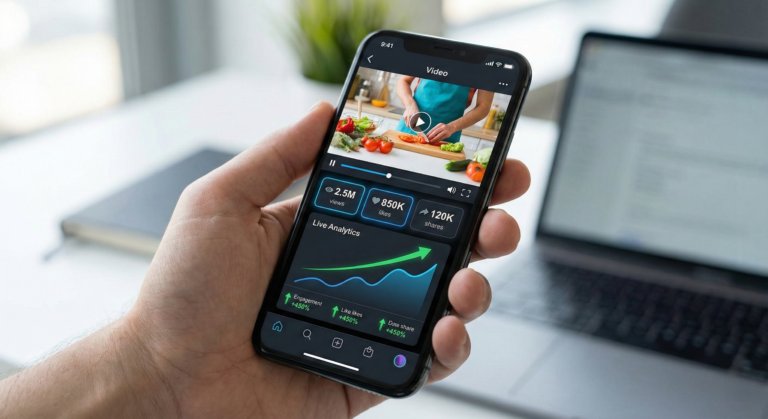



The Psychology Behind High-Converting Video Ads in 2026, video ads are everywhere. From Instagram Reels to YouTube pre-rolls, brands are competing for attention in a crowded digital space. But only a small percentage of video ads actually convert.
Why?
Because high-converting video ads are not just about visuals, they are built on psychology.
Understanding how people think, feel, and make decisions is what separates average ads from high-performing ones.
If you want to understand the technical foundation first, read What Is Professional Video Editing? A Complete Beginner’s Guide. And if your videos aren’t performing well, check Why Most Business Videos Fail (And How to Fix Them).
Now let’s break down the psychology that drives conversions.
Attention: The First Psychological Battle
Human attention spans are shorter than ever. Platforms like TikTok and Instagram reward content that grabs attention instantly.
If your ad doesn’t hook viewers in the first 3–5 seconds, you’ve already lost.
High-converting ads use:
- Pattern interrupts
- Bold statements
- Emotional triggers
- Visually dynamic openings
The brain is wired to notice contrast and novelty. That’s why surprising visuals or strong claims perform better than slow introductions.
Emotion Drives Decisions
People believe they make rational decisions.
They don’t.
Research consistently shows that emotion plays a dominant role in purchasing decisions. According to insights shared by Harvard Business School, emotional connection significantly influences buying behavior.
High-converting video ads tap into emotions like:
- Fear (missing out, losing opportunity)
- Desire (success, luxury, improvement)
- Belonging (community, identity)
- Relief (problem solved)
A product demonstration alone rarely converts. A product tied to an emotional outcome does.
The Power of Storytelling
The human brain is wired for stories.
When information is presented as a narrative rather than a list of features, it activates multiple areas of the brain. This increases retention and emotional engagement.
A simple high-converting ad structure looks like this:
- Hook
- Problem
- Agitation
- Solution
- Proof
- Call to Action
This structure works because it mirrors how humans process challenges and solutions.

If you’re unsure whether your content structure is strong, review The Complete Guide to Professional Video Editing for Businesses in 2026 for a deeper strategy breakdown.
Social Proof Builds Trust
Trust reduces friction.
When viewers see testimonials, reviews, or user-generated content, psychological resistance decreases.
According to research from HubSpot, customer testimonials significantly increase conversion rates in digital campaigns.
In video ads, social proof can include:
- Customer testimonials
- Before-and-after results
- Statistics
- Influencer endorsements
The brain interprets social proof as validation, making viewers feel safer about purchasing.
Scarcity and Urgency Trigger Action
Humans are loss-averse.
We fear missing out more than we desire gaining something new.
That’s why phrases like:
- Limited time offer
- Only 50 spots left
- Sale ends tonight
are effective.
Scarcity activates a psychological response that accelerates decision-making. However, it must be genuine. Fake urgency damages brand trust long-term.
Visual Clarity and Cognitive Load
If your video is visually chaotic, the brain struggles to process it.
High-converting ads use:
- Clear visuals
- Simple messaging
- Clean captions
- Focused calls-to-action
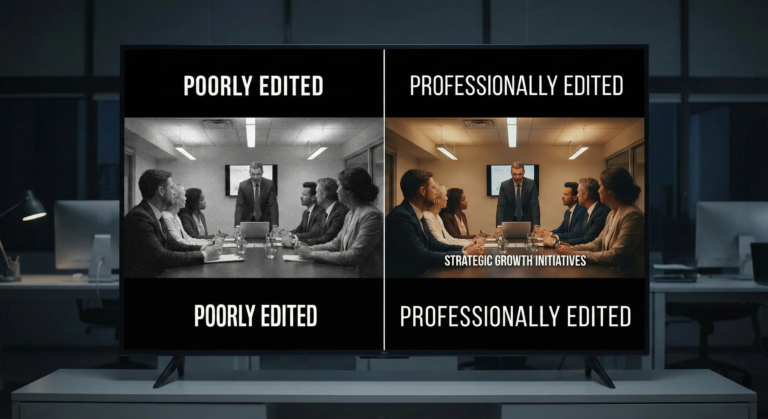
Reducing cognitive load increases comprehension and retention. Professional editing ensures pacing, color grading, and transitions support the message rather than distract from it.
Platforms like YouTube especially reward videos that maintain viewer attention through clean structure and optimized pacing.
Repetition Increases Familiarity
Repetition builds trust.
When viewers repeatedly see your brand, message, or visual identity, familiarity reduces skepticism.
Consistent:
- Brand colors
- Logo placement
- Tone of voice
- Editing style
build recognition over time.
This is why consistent video marketing strategies outperform one-off campaigns.
Clear Call-to-Action Removes Friction
Many video ads fail because they don’t tell viewers what to do next.
Even if emotion and trust are strong, confusion reduces conversions.
High-converting video ads end with:
- A single, clear instruction
- Strong visual emphasis
- Verbal reinforcement
Simplicity drives action.
Why Psychology + Editing Must Work Together
Psychology without quality editing looks amateur. Editing without psychology lacks impact.
The combination of:
- Strong hook
- Emotional storytelling
- Social proof
- Strategic pacing
- Clear CTA
creates ads that convert.

If you’re still evaluating your video strategy, read 7 Signs Your Business Needs Professional Video Editing in 2026 to identify performance gaps.
Final Thoughts(The Psychology Behind High-Converting Video Ads)
High-converting video ads are not accidental. They are strategically designed around human psychology.
In 2026, the brands that understand attention, emotion, storytelling, and trust will dominate digital advertising.
If your video ads aren’t converting, the issue isn’t just production quality it’s psychological strategy. When psychology and professional editing align, conversions follow.
FAQs
What makes a video ad high-converting?
A high-converting video ad combines a strong hook, emotional storytelling, social proof, urgency, and a clear call-to-action, supported by professional editing.
Why is psychology important in video advertising?
Psychology influences attention, emotion, trust, and decision-making. Understanding buyer behavior helps create ads that resonate and convert effectively.
How do emotions impact video ad performance?
Emotions like desire, fear, relief, and belonging strongly influence purchasing decisions, making emotionally driven ads more effective than purely informational ones.
Does professional video editing improve ad conversions?
Yes. Professional editing enhances pacing, clarity, and engagement, which increases watch time and improves overall conversion rates.